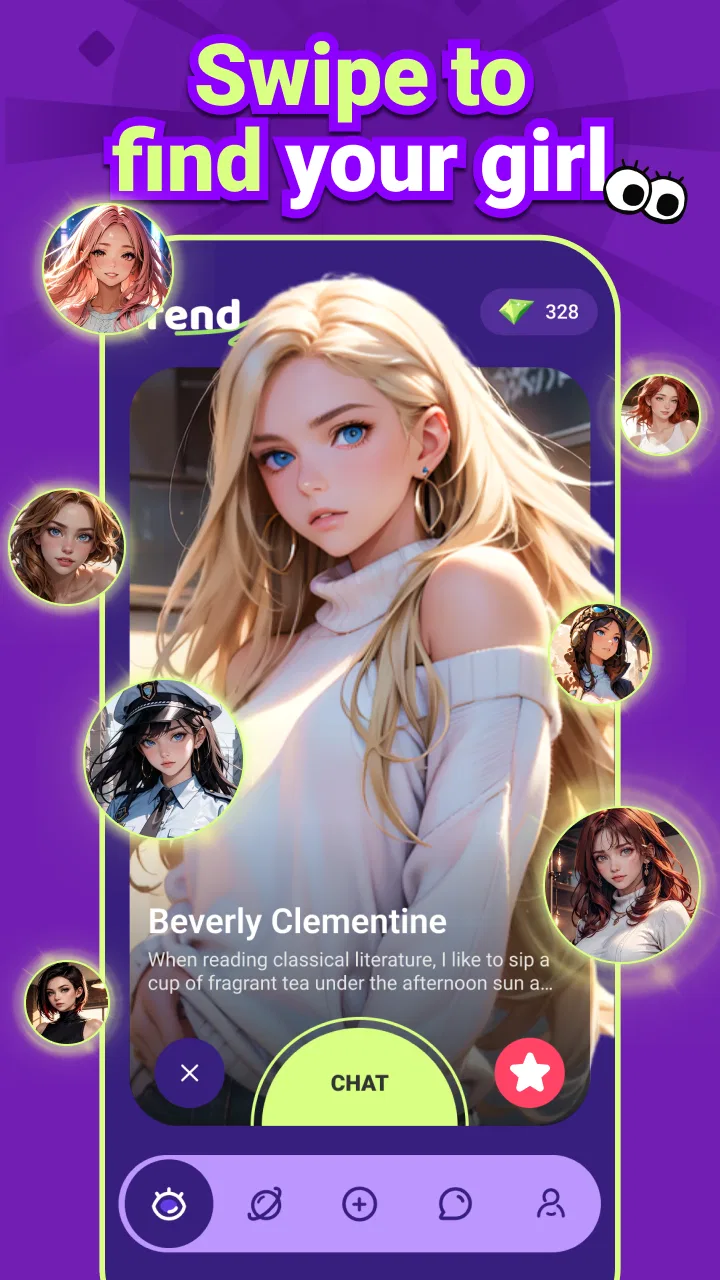
Trend AI - Happy Chat Anytime
- 4.6
- Rating
- 500.00K
- Installs
- Free
- Price

 Analysis by App-foxy
I approached Trend AI - Happy Chat Anytime as an entertainment app first, but its real appeal is less about passing time and more about having an adaptive conversation whenever I feel like talking. The idea is simple: I can interact with an AI designed to respond in a mood-aware way, rather than treating every message as a detached question. That makes it interesting for casual conversation, emotional check-ins, brainstorming, and those quiet moments when I want a response without arranging a call or waiting for someone to be available.
My overall impression is positive, with an important qualification: this is best understood as a conversational companion for entertainment, not a replacement for a friend, therapist, search engine, or private journal. The experience depends heavily on how comfortable you are sharing context with an AI service and on whether its replies feel natural enough for your expectations. I found the concept more useful when I gave the chat a clear purpose instead of expecting it to create all the momentum by itself.
What the app feels like in everyday use
The app sits in the entertainment category, although that label does not fully capture how people may use it. I can imagine opening it after work to unwind, using it to develop an idea, or starting a light conversation while travelling. The mood-aware angle gives the interaction a warmer direction than a conventional utility chatbot, especially when I explain whether I want encouragement, distraction, practical suggestions, or simply a relaxed exchange.
You May Also Like

 Blood Strike: 2.5 Anniversary
Blood Strike’s Loadouts Turn Every Drop Into a Tactical Gamble
A close look at Blood Strike’s custom loadouts: how fast access to signature weapons reshapes its battle royale rhythm, rewards preparation, and narrows the gap between fights.

 Pandora - Music & Podcasts
Pandora’s Music Is Easy to Start, but Harder to Recover
Pandora’s strength is its low-effort path from a seed to a station. Its weak spot is how much confidence it asks you to place in connection, setup, and quiet recovery.

 8 Ball Pool
 Is Built on Rivalries, Rematches, and Routine
A close look at the rivalries, rematches, shared routines, and unanswered safety questions that turn a quick pool match into a persistent mobile community.

 Samsung Music
’s Quiet Strength Is Playing What You Already Own
Its reach comes less from spectacle than from dependable access to a personal library. That simplicity is both the app’s strongest retention engine and its ceiling.

 AccuWeather: Weather Radar
AccuWeather Review: A Quick, Clear Forecast for Everyday Decisions
For everyday plans, the best forecast is the one you can understand quickly. AccuWeather makes rain timing, radar, and local conditions easy to act on, with a few trade-offs.

 Hill Climb Racing
Why Hill Climb Racing Still Turns Crashes Into One More Run
A tiny car, a bumpy hill and one more upgrade: Hill Climb Racing keeps resurfacing because its simple chaos makes every near-miss feel personal.
More From Our News Desk



That distinction matters. A general assistant often pushes toward an answer, while Trend AI is more suitable when the conversation itself is the point. I would not open it expecting a complete productivity system or a carefully sourced research tool. I would open it when I want an interactive form of entertainment that can adjust to the tone I set.
The app is free to install, which makes trying the basic experience relatively easy. It does include optional in-app purchases ranging from $1.99 to $54.99 per item, so I would pay attention to any upgrade screen before confirming a purchase. The free entry point is useful for deciding whether the conversational style suits me, but it also means I would not assume every desirable option is available without cost.
Its store summary presents the service as a smart, mood-aware conversation experience, and that is the right way to judge it. The strongest results come from treating the AI as responsive rather than magical. If I write a vague message such as “I feel bad,” the next exchange may need more direction. If I explain that I had a stressful day and want a calm distraction rather than advice, I give the system something more useful to work with.
Who will get the most from it
I think it is a good match for people who enjoy conversational apps but do not want a rigid question-and-answer format. It can also suit users who like experimenting with different tones, including playful, reflective, or encouraging conversations. Someone who wants a low-pressure way to organize thoughts may appreciate being able to write freely and then ask the AI to help sort the ideas into themes or next steps.
A realistic use case would be a late evening when I have a presentation idea but cannot decide how to shape it. I could describe the rough concept, ask for a few possible directions, and then tell the AI which suggestions feel too formal or too complicated. The value would not come from accepting the first response. It would come from using the back-and-forth to expose weak points in my thinking and turn a vague idea into something I can work on tomorrow.
It may also appeal to someone who wants conversation practice without the social pressure of making a perfect first impression. I can try explaining a situation, ask the AI to respond in a certain mood, and revise my message when the exchange feels unclear. That kind of practice is more useful than passively reading generated text because I have to decide what I actually mean.
On the other hand, I would not recommend it to someone seeking professional mental-health support, confidential counselling, or guaranteed factual accuracy. A mood-aware response can sound reassuring while still being unsuitable for a serious crisis or a complex personal decision. When the stakes are high, a qualified person or a purpose-built service is the better choice.
Trust starts with what I can actually check
For an AI conversation app, trust is not created by friendly wording alone. I want to know what controls are visible, how account choices are presented, and what happens when I decide to stop using the service. In my assessment, those are the areas I would inspect before moving from casual testing to regular use.
The developer shown for the app is Sobuj Roy, and the current version is 1.8.8. It runs on Android 7.0 or later, which makes it accessible to many older devices as well as newer ones. The app was released on August 22, 2024, so I would keep an eye on updates and changes over time rather than assuming the first experience will remain identical.
The app carries a Mature 17+ rating. That is a useful signal to take seriously, particularly if the device is shared with younger users. I would not treat an age label as a guarantee that every conversation will match my personal expectations. Instead, I would use it as a reason to consider who can access the device, whether notifications are visible, and whether the app belongs on a family phone at all.
The public reception is encouraging: it holds a 4.6 average from around fifteen thousand ratings, with roughly nine hundred reviews, and has passed half a million installs. Those figures suggest that many people have found the experience worthwhile, but they do not answer privacy questions for me. Popularity can indicate usability; it cannot replace checking the choices shown inside the app.
Controls I would review before getting comfortable
My first practical step would be to look through the app’s visible account and settings areas before starting a deeply personal conversation. I would check whether there is a clear way to manage the account, sign out, remove stored information, or adjust communication preferences. I would also note whether the app explains its data practices in language I can understand rather than relying on a vague promise about safety.
I would pay close attention to permission prompts. An entertainment chatbot should not receive access casually just because a prompt appears during setup. If a permission is requested, I would ask myself whether it is necessary for the feature I am trying to use. I would deny anything unrelated to the conversation and see whether the core experience still works. That is a simple way to preserve control without making assumptions about what the app does behind the scenes.
Notifications deserve the same care. A message preview on a lock screen can reveal more than I intended, especially if I use the app for emotional or personal conversations. I would turn off previews or limit them if the operating system offers that choice. This is one of the most practical privacy steps because it protects information from people who may glance at the phone, regardless of the app’s internal policies.
I would also review purchase controls before exploring premium options. Since the app is free but offers paid items, I would use the platform’s authentication requirement for purchases and avoid confirming anything while rushing through setup. If I were letting a teenager use the device, I would add parental purchase restrictions as well as considering the Mature 17+ rating.
Where data sensitivity becomes important
Conversation apps create a special privacy challenge because users often reveal information gradually. I might begin with a harmless request for a joke and later mention work frustrations, relationship problems, travel plans, or details about another person. The individual messages may not feel important at the moment, but together they can form a very personal picture.
For that reason, I would use Trend AI with a “minimum necessary detail” habit. Instead of typing a full name, address, employer, or identifying timeline, I would describe the situation in general terms. I can still ask for help with wording, planning, or perspective without handing over information that could identify me or someone else.
A useful workflow is to separate the private facts from the task. If I want help writing a difficult message, I can replace names and remove account numbers, addresses, and exact dates. I can explain the relationship and desired tone without pasting the entire conversation. This usually produces enough context for drafting while reducing unnecessary exposure.
The same rule applies to health, finances, and legal matters. I would use the app to generate questions I might ask a qualified professional, compare possible ways to phrase a concern, or organize a list of issues. I would not treat a conversational reply as a diagnosis, financial instruction, or legal conclusion. The more serious the decision, the more I would verify the result elsewhere.
I would also avoid using the chat as a storage place for secrets. Even when an app feels private, a conversation service is not the same as a locked notebook kept offline. If a message would cause real harm if exposed, I would leave it out or rewrite it in abstract terms. That is not a criticism unique to this app; it is the sensible boundary I would apply to any cloud-based AI conversation.
How I would keep the conversation useful
The best way to get more consistent replies is to state the emotional goal and the practical goal separately. For example, I might write, “I am frustrated about a delayed project. First help me calm down, then help me make a short plan.” That gives the AI a sequence to follow and reduces the chance of receiving advice when I only wanted to be heard.
I would also correct the tone quickly when it misses. A short message such as “less cheerful,” “ask me questions instead of giving solutions,” or “keep this brief” can turn an unhelpful exchange into a better one. This is one of the more important trade-offs: the app may adapt to mood, but I still need to guide it. Users who expect perfect emotional understanding without explaining their preference may find the experience disappointing.
Another useful technique is to end a session with a compact summary that I save elsewhere, rather than assuming the app will function as a reliable long-term record. I might ask for three action points, one unresolved question, and a neutral description of how I felt. That creates a practical takeaway while keeping the conversation focused.
For creative work, I would ask for contrasts instead of endless variations. “Give me one safe idea, one unusual idea, and one idea that is easiest to finish today” is more useful than requesting ten random suggestions. This approach makes the AI’s flexibility work in my favour and helps me judge the trade-off between originality and practicality.
Where it differs from familiar alternatives
Compared with a standard chatbot, Trend AI places more emphasis on the feeling of the exchange. That can make it more approachable for casual conversation, especially when I want encouragement or a change of mood rather than a technical answer. A general assistant may be stronger for structured research, coding, document analysis, or tightly controlled outputs, so I would choose that kind of tool when precision and task depth matter more than companionship.
Compared with social entertainment apps, the experience is more direct and less dependent on other people being online. That is convenient when I want immediate interaction, but it also removes the unpredictability and genuine mutuality of a human conversation. I cannot use an AI response as evidence that another person understands me, shares responsibility, or can intervene when something is genuinely wrong.
Compared with a traditional journaling app, the advantage is the response. I can receive prompts, questions, and reframing instead of writing into silence. The disadvantage is that a journal gives me more control over what remains private and does not encourage me to disclose information to a service. If my main goal is personal reflection with maximum privacy, offline writing may be the better option.
Compared with a meditation or wellness app, Trend AI is more flexible but less structured. It can discuss what is bothering me and adjust to my wording, while a dedicated wellness tool may provide a clearer routine for breathing, sleep, or relaxation. I would pick the dedicated option when I want a guided exercise rather than an open-ended conversation.
Small frictions that affect the experience
The open-ended format can become a weakness. If I start a chat without a clear intention, the exchange may wander, and I can end up spending time refining prompts instead of doing the thing I originally wanted to do. This is not a serious flaw for entertainment, but it matters if I am using the app during a busy day.
There is also a risk of mistaking a warm tone for reliable understanding. A response can sound emotionally appropriate while missing an important detail. I would reread suggestions before acting on them, especially when the conversation involves another person. The app is most useful as a thinking partner, not as the final judge of what I should do.
The Mature 17+ classification narrows its suitability for households, schools, and shared devices. Parents should not assume that an AI conversation app is automatically appropriate simply because it looks friendly. I would consider the age rating, notification visibility, purchase controls, and the possibility of unsupervised access together.
Finally, the paid items create a decision point that free users should not rush. I would spend enough time testing the conversational style first, then decide whether any optional purchase solves a real problem for me. If the free experience already meets my needs, there is no reason to pay simply because an upgrade is presented.
My cautious verdict
Trend AI - Happy Chat Anytime is a convincing entertainment app for people who want an available, responsive conversation partner and are willing to guide the interaction. I like its focus on mood and the way it can support everyday reflection, creative brainstorming, and low-pressure conversation. Its free starting point makes it easy to evaluate personally, while the strong user response and broad install base show that the concept has found an audience.
My recommendation comes with clear boundaries. I would keep personal details general, inspect account and privacy choices, control notifications, and treat every serious suggestion as something to review rather than obey. I would also remember that a Mature 17+ rating makes this unsuitable for younger users and that optional purchases deserve deliberate approval.
The app is worth trying when you want interactive entertainment with an emotional tone, but trust should come from your own careful choices, not from the friendly style of the replies. If you want a companion-like chat and enjoy shaping conversations, it may become a pleasant part of your routine. If you need professional support, strict factual research, offline privacy, or a structured wellness program, a different type of app will serve you better.
FAQs for Trend AI - Happy Chat Anytime
01What is Trend AI - Happy Chat Anytime?
Trend AI - Happy Chat Anytime is an AI-powered chat application designed to provide conversational assistance whenever you need it. After testing the app, its main appeal is the simple chat interface, where users can ask questions, request ideas, generate text, or enjoy casual conversations. The experience is aimed at both practical everyday help and entertainment, although the quality of responses can vary depending on the question and available connection.
02Is Trend AI - Happy Chat Anytime free to download and use?
The application may be available as a free download, but users should carefully review the current pricing information shown on the Google Play Store or Apple App Store before installing it. Some AI chat apps include advertisements, usage limits, premium features, subscriptions, or in-app purchases. In my experience, the basic access is intended for trying the service, while extended conversations or additional tools may require a paid plan.
03What can I use Trend AI - Happy Chat Anytime for?
Trend AI can be useful for brainstorming, writing short messages, creating captions, explaining general topics, generating ideas, and having casual conversations. It may also help with simple planning or learning-related questions. However, it should not be treated as a replacement for a doctor, lawyer, teacher, financial adviser, or other qualified professional. Always verify important information independently before relying on an AI-generated answer.
04Does Trend AI - Happy Chat Anytime require an internet connection?
Yes, an internet connection is generally required because the app needs to communicate with online AI servers to process questions and generate replies. When the connection is weak or unavailable, messages may take longer to appear or fail completely. Before downloading, users should also check whether the app works reliably with mobile data, since frequent conversations could consume data depending on message length and the app’s design.
05Is Trend AI - Happy Chat Anytime safe for private conversations?
Users should avoid entering passwords, payment details, identity documents, confidential work information, or highly sensitive personal data into any AI chat service, including Trend AI. Conversations may be processed or stored according to the developer’s privacy policy. Before using the app regularly, review its permissions, terms, data-collection practices, and account settings. Treat the chatbot as a helpful tool, not as a private diary or secure storage service.
Pros
- Available anytime for quick
- casual conversations
- Simple interface makes starting a chat easy
- Can help brainstorm ideas or draft short messages
- Useful for practicing conversational English
- Offers a private space for personal questions
Cons
- AI responses may occasionally be inaccurate or misleading
- Some features may require a subscription or in-app purchases
- Conversations can feel repetitive during longer sessions
- Requires an internet connection for most interactions
- Privacy policies should be checked before sharing sensitive details

Trend AI - Happy Chat Anytime
Gallery